A monochrome walk with the Nikon Zf and the Nikkor 40mm f/2
I think sometimes that familiarity with an area can undermine one’s appreciation of it: I’ve lived in the area I currently live in for seventeen years, around half of my life. I think as well that the fact that one always perceives things with one’s own eyesight leads to things being underappreciated over time: I notice the things I notice, and training myself to see things that usually escape my notice is difficult. Taking away my ability to see in colour is an interesting way to help myself see the familiar in an unfamiliar way, and the black and white mode on a Nikon Zf is a good way to do that. As much as I love the weight and heft of a DSLR, there’s a definite ease in being able to see things “as the sensor sees them” with a mirrorless camera. Walking around streets I have known for over a decade and a half, seeing them in black and white through a viewfinder did help me see things that I don’t usually, especially in terms of textures. As a means of comparison, all images in this post can be dragged left to right to change between showing their colour and their monochrome versions (the colour version was obtained with an unopinionated default development from the raw image data; the black and whites are straight out-of-camera JPEGs): I can only hope kind readers would agree that my preference for these images being monochrome is not just an exercise in me feeling “black and white makes it art.”
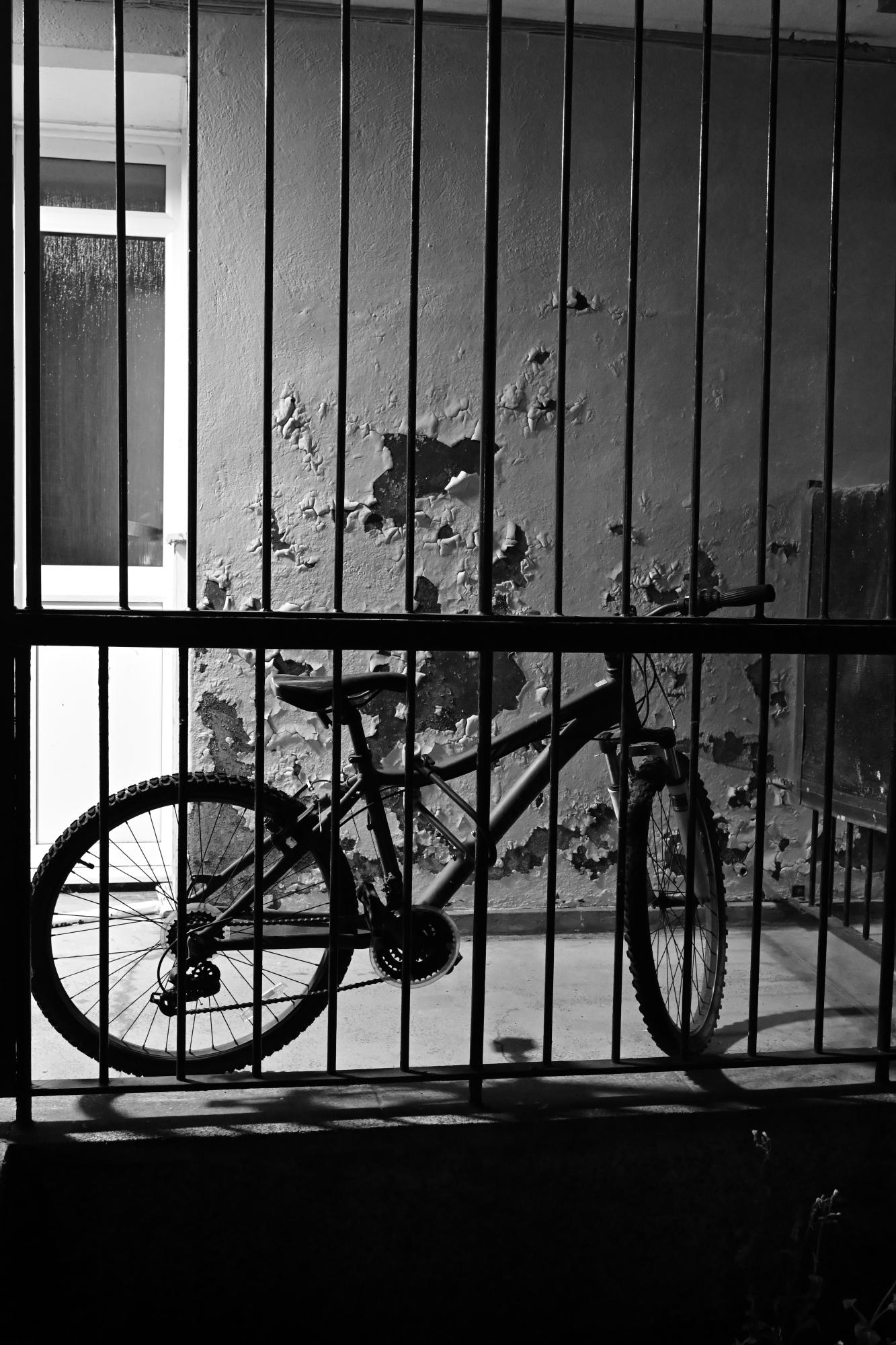
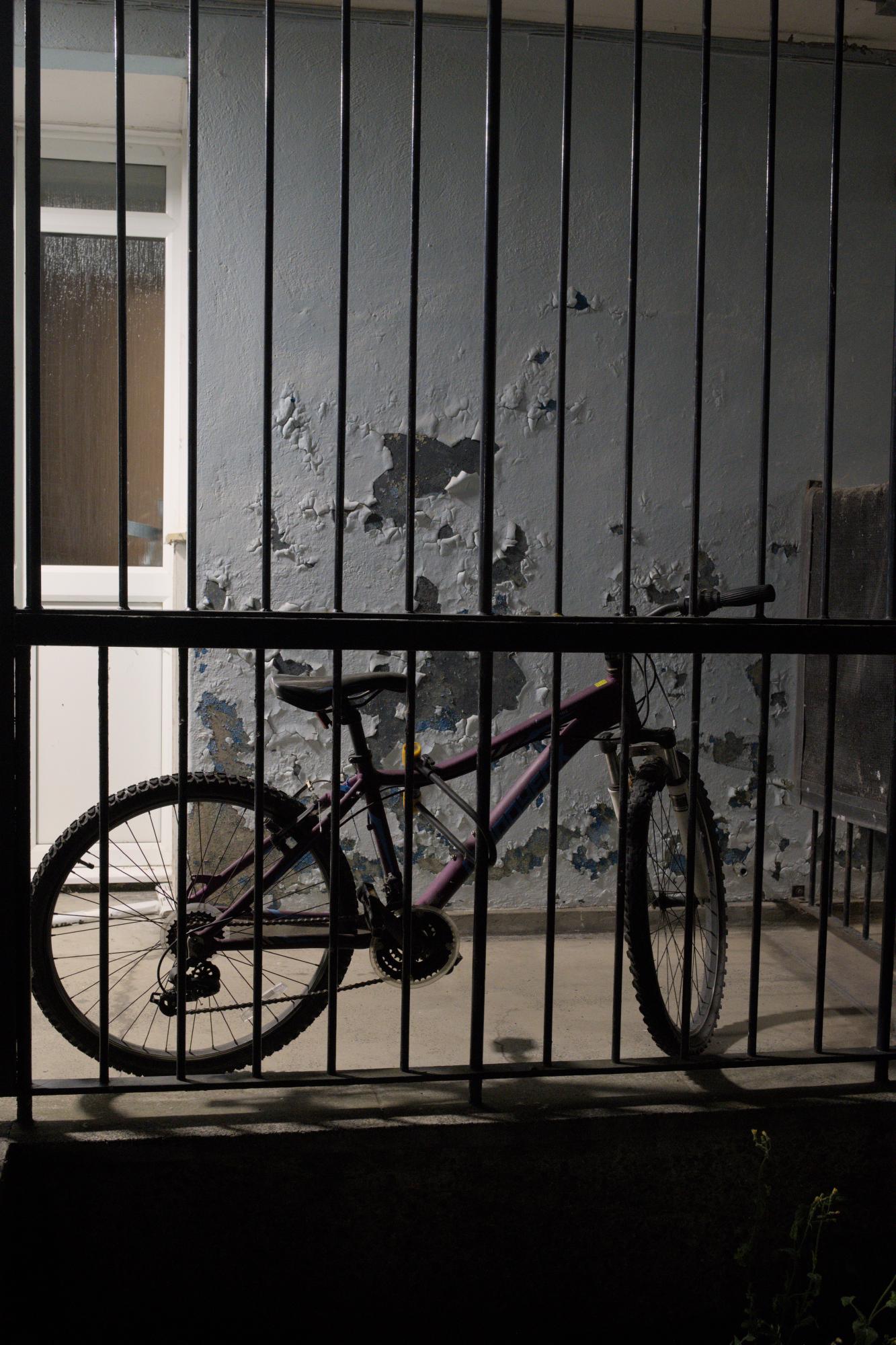
Between the grain present in the black and white version of the image (delivered by the Zf’s relatively-recently-released grain features) and the way that the absence of colour and primacy of tonality inherent in a monochrome image lends focus to variances in that tonality, the deformation and blistering of the paint on the wall draws focus in a way that it just doesn’t in the full colour version. The increased uniformity in the tones of the bike in monochrome makes it look a little more silhouetted and a little more, to me, interesting in relief of the borderline-fucked wall behind it. While that could have been achieved in exposing more for the background, I’m not sure that that would have resulted in anything other than blown highlights there which may have destroyed some of the texture detail. I think this could have only been achieved in monochrome.
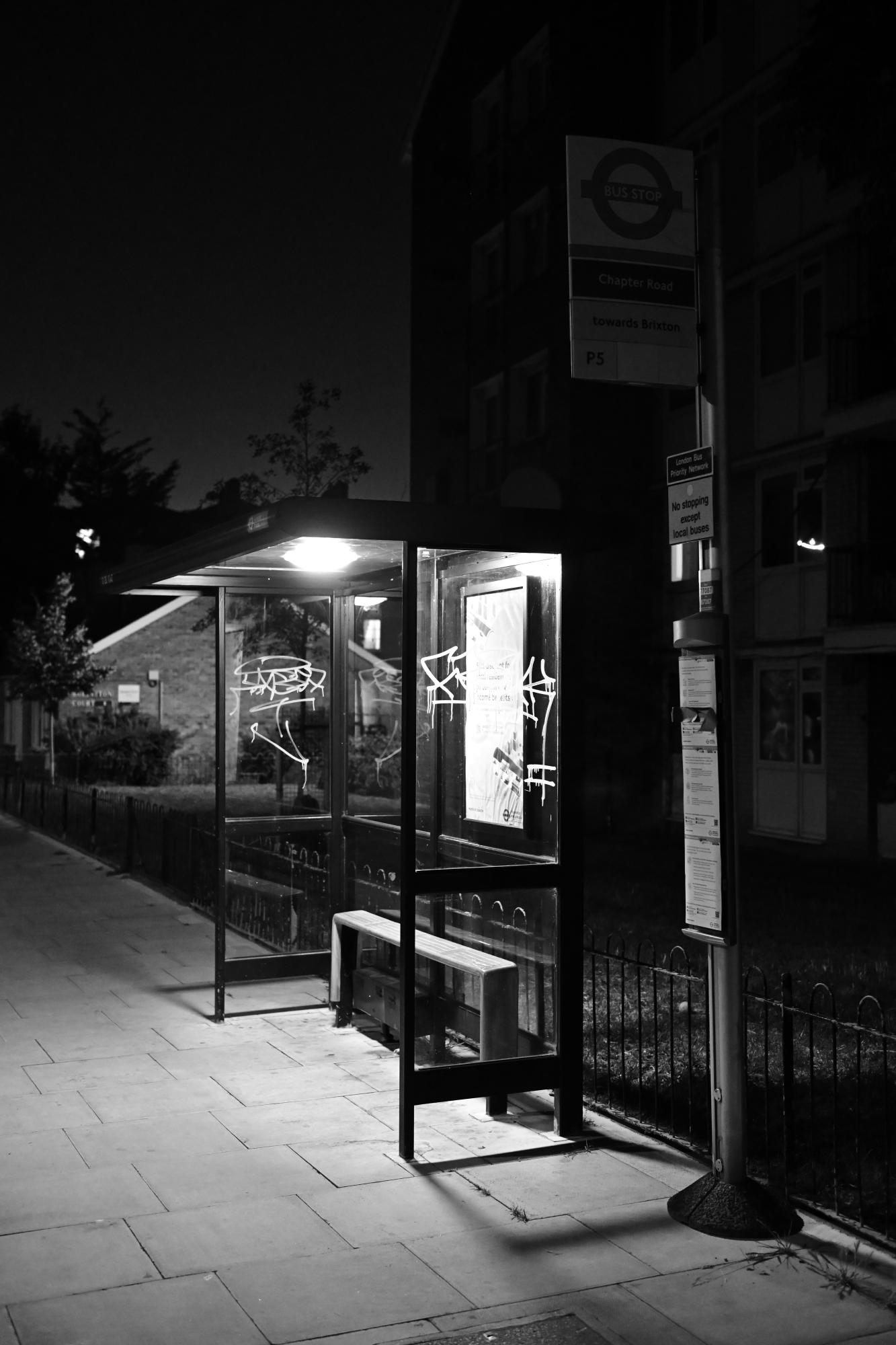
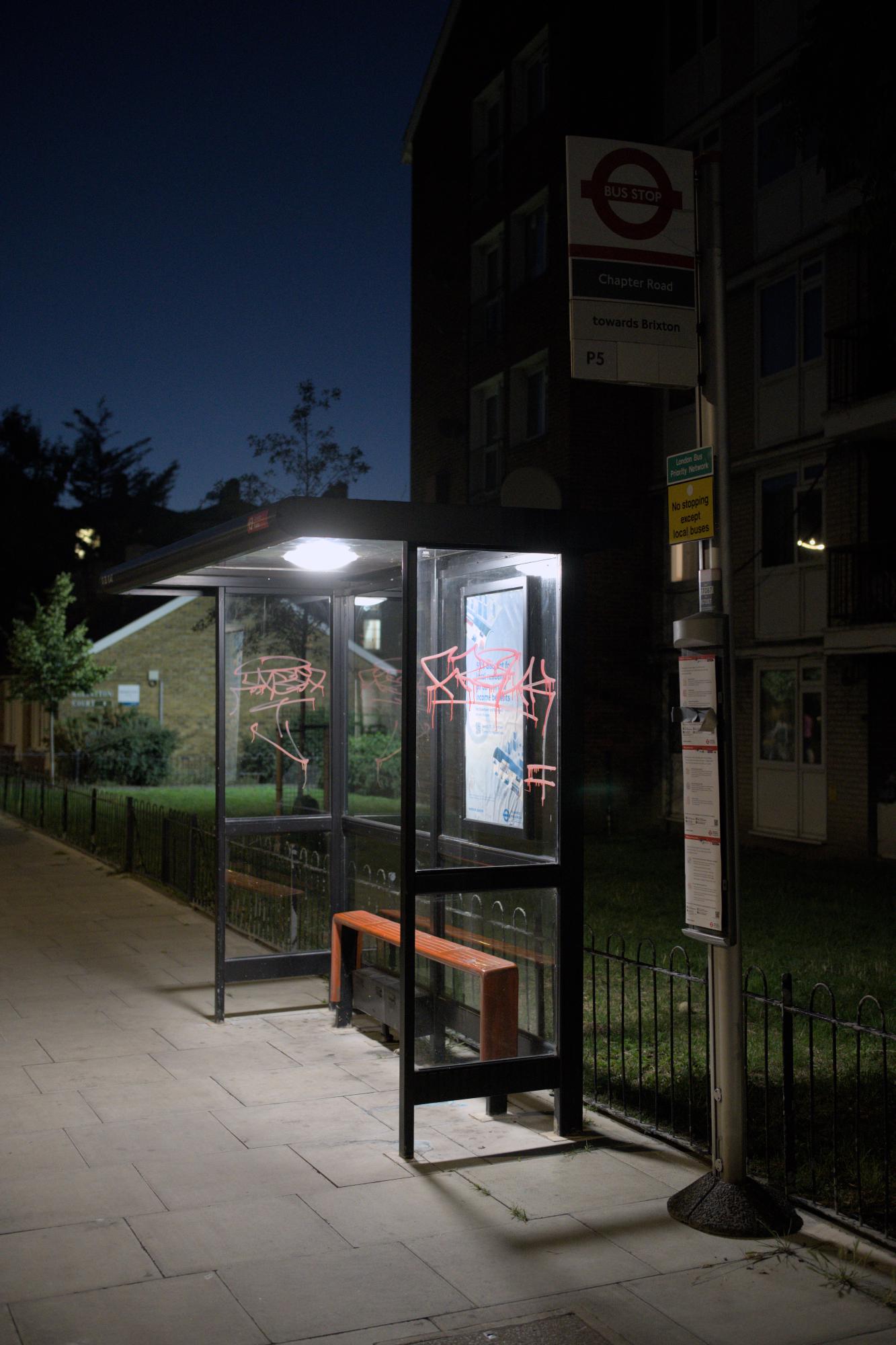
I think the London equivalent of the “petrol station at night” trope that photographers from the US seem to enjoy is “public transport stops at night”: they’re overly familiar on account of their centrality to daily life, but it’s that familiarity that lends them a little romance. They have, by nature, high dynamic range on account of the decent street lighting that tends to accompany them and the, well, darkness of night: it’s the same photo. I love the brightness of the reds in this photo rendered in black and white: the bench contrasts so strongly against the darkness of the bus stop’s frame, with the graffiti on the furthermost side of the bus stop similarly providing an anchor for attention with its brightness. I’m not satisfied with the rendering of the bus stop sign itself here: it is a little dark. Exposing for anything other than the brightness of the lights in the shelter would have led to that area being completely blown out: I think this is the best compromise for the overall integrity of the image.
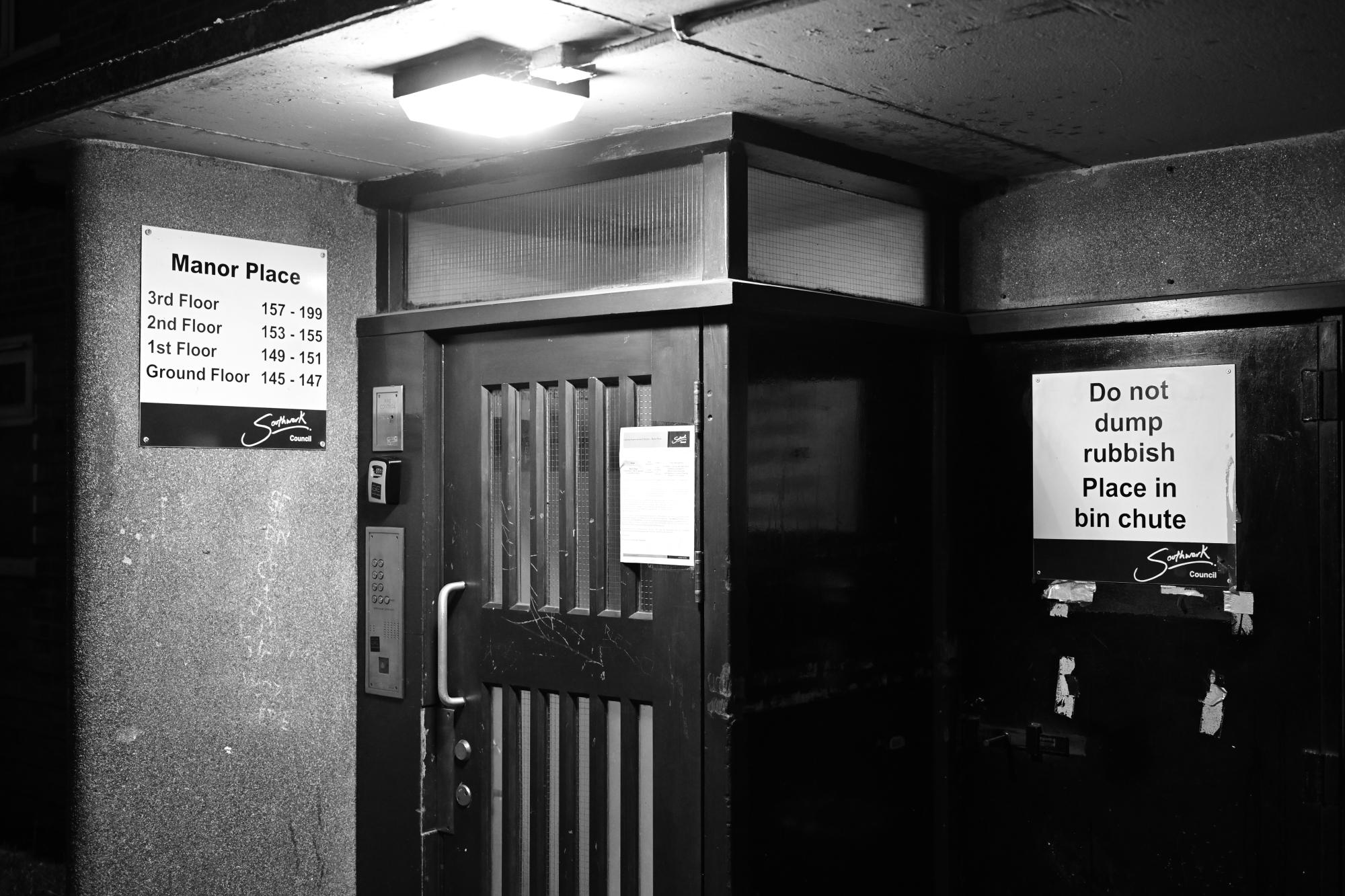
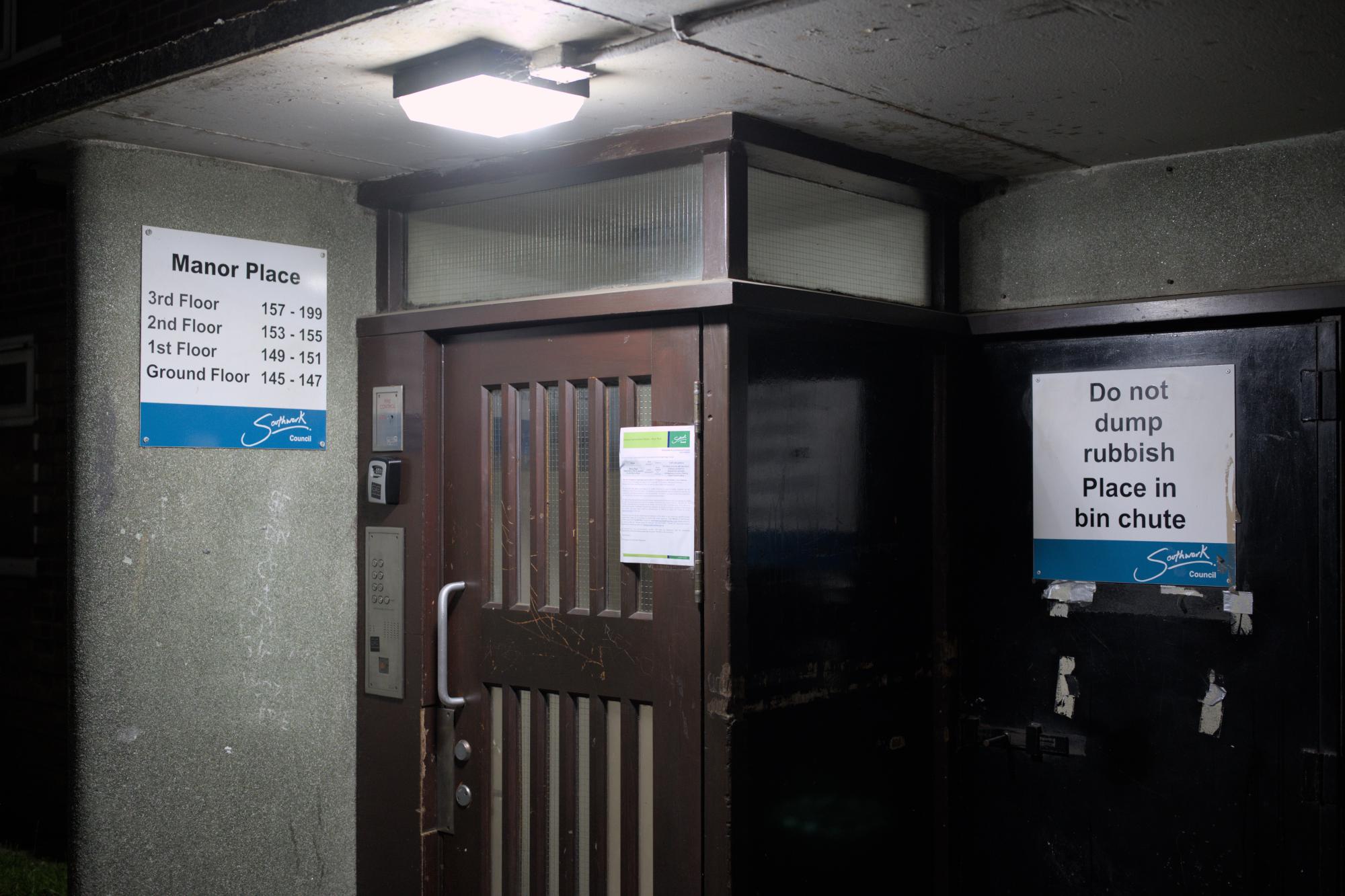
Something I value about the area is the extent to which council housing estates have been retained and (externally, at least) maintained. As much as the loss of the Heygate estate resulted in a displacement of a large number of people and I have apprehensions about what the opening of a Blank Street will do to the area, Southwark seems to be serious about housing people. Increased contrast here makes the entrance look moodier, especially combined with the grain: this is an unfortunate thing, given biases people have about council blocks. Cognitive associations aside, there’s a defined amount of texture, once again, that is added in the monochrome rendition: the concrete of the rear wall pops more, and the scratches on the wood of the door are thrown into relief. These are things that would likely be noticed in the colour version, but sing in the monochrome.
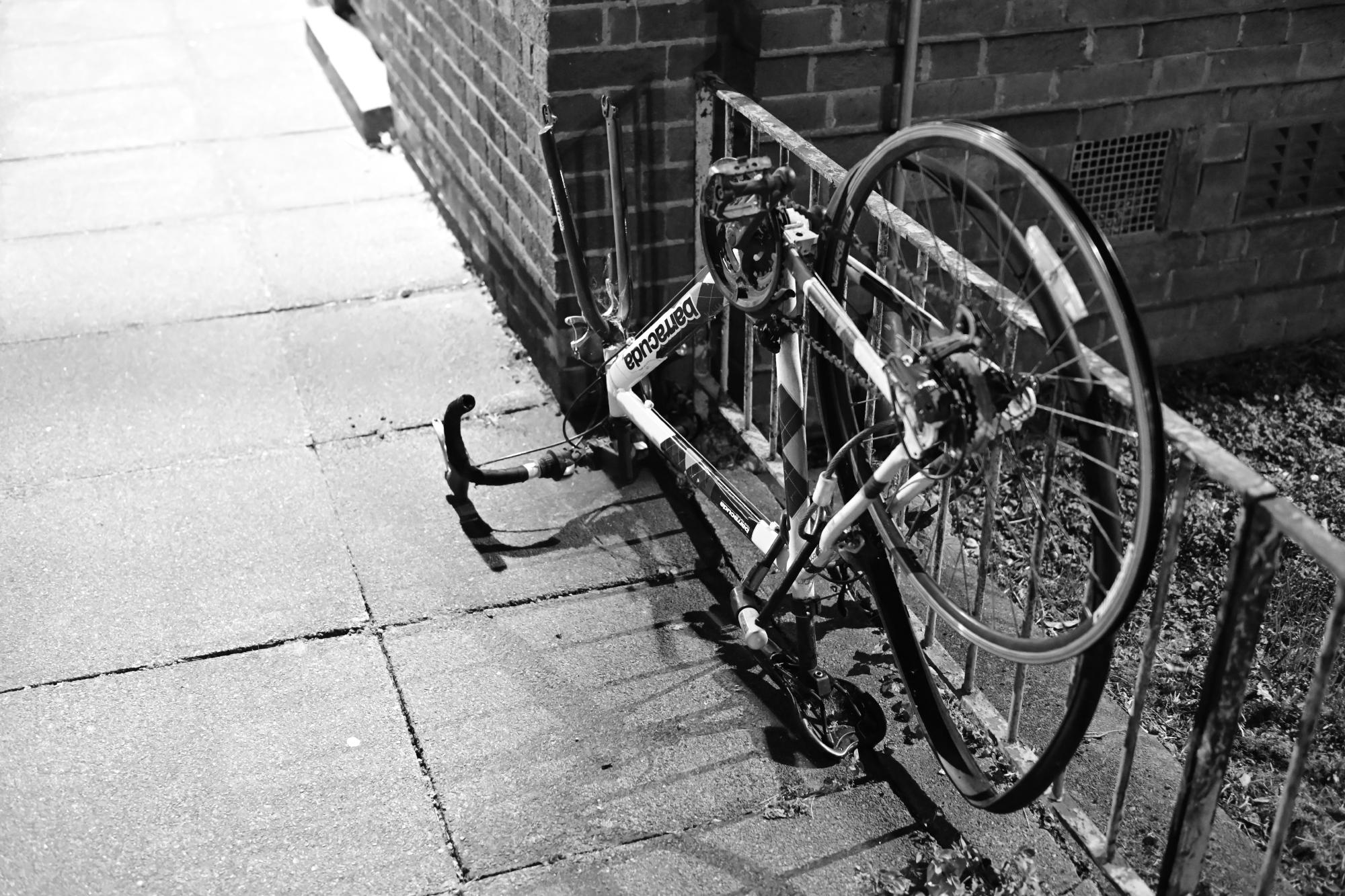
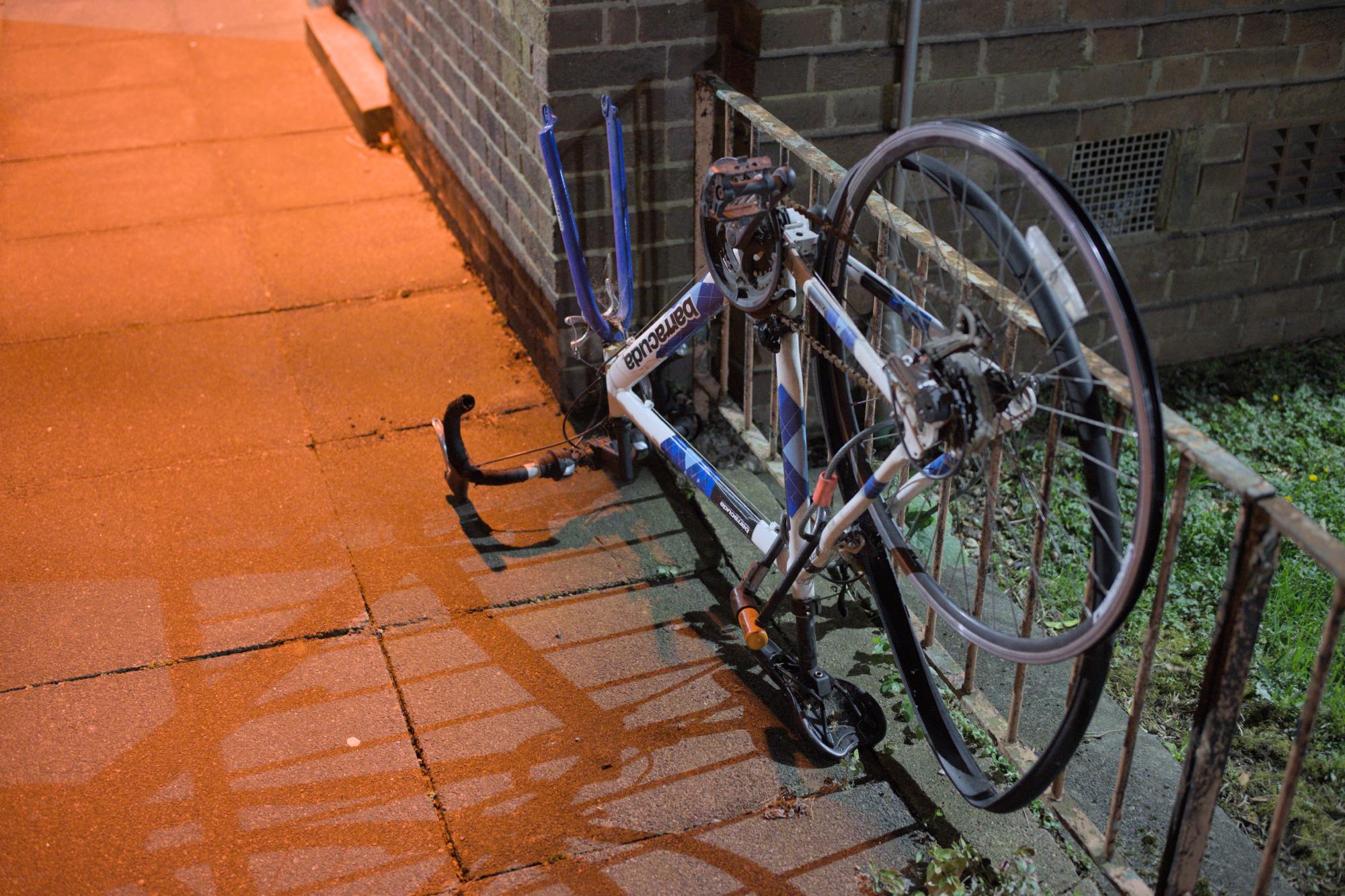
There’s a bike with missing wheel(s) around every corner: I choose to believe that this is intentional on the part of the owner lest I get lost completely in thoughts of how sad it is that parts of bikes get stolen so readily. Familiar though the sight is, I think this example of an unwheeled bike goes a little beyond the familiar in a monochrome rendering. Similar to the first image in this post, the additional texture added to the damage present on the gate the bike is locked to adds a little grit to a depiction of what is probably a vehicle that has either been harvested for parts or abandoned. The desaturation of the green from the grass and the orange from the lighting similarly draws focus to the subject of the image: it limits distraction. This probably could have also been achieved with more careful composition - a lower vantage point, perhaps - but I like the leading lines that result from the parallelism (well, almost) of the lines of the gate and the lines between the paving slabs.
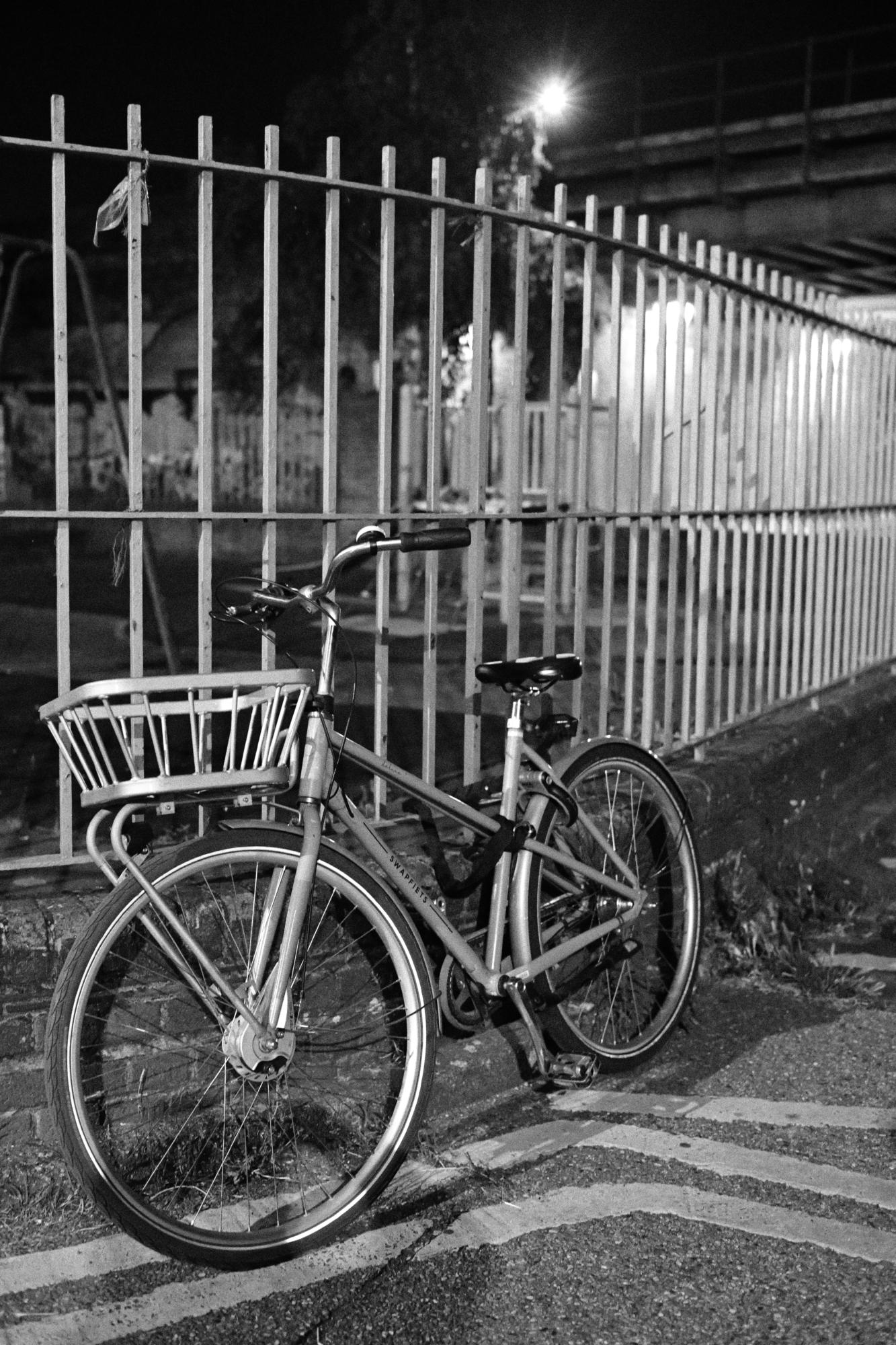
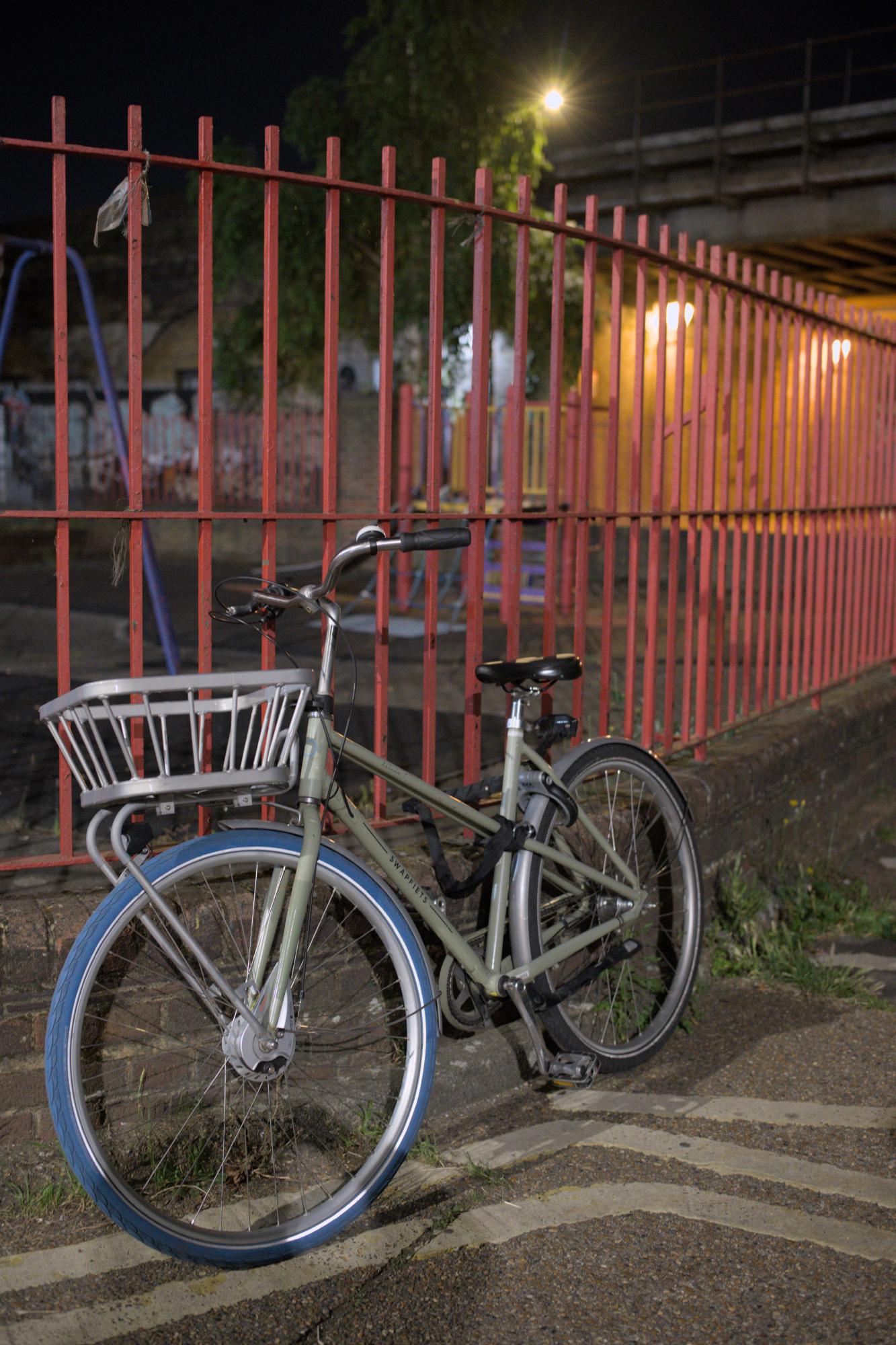
Of these images, this is the one that benefits most from the digital red filter that I had chosen to use for this walk: I think the fence behind the bike would be too dark otherwise, and the contrast in the image too low to make anything look anything other than a little dull. The darkening effect of the filter on the blue of the tyres is also a boon: it’s yet more contrast in the image that is unremarkable in the colour version. The darkening of the green of the grass growing from the wall in the middle-right of the image also ensures that attention is retained on the bike.